
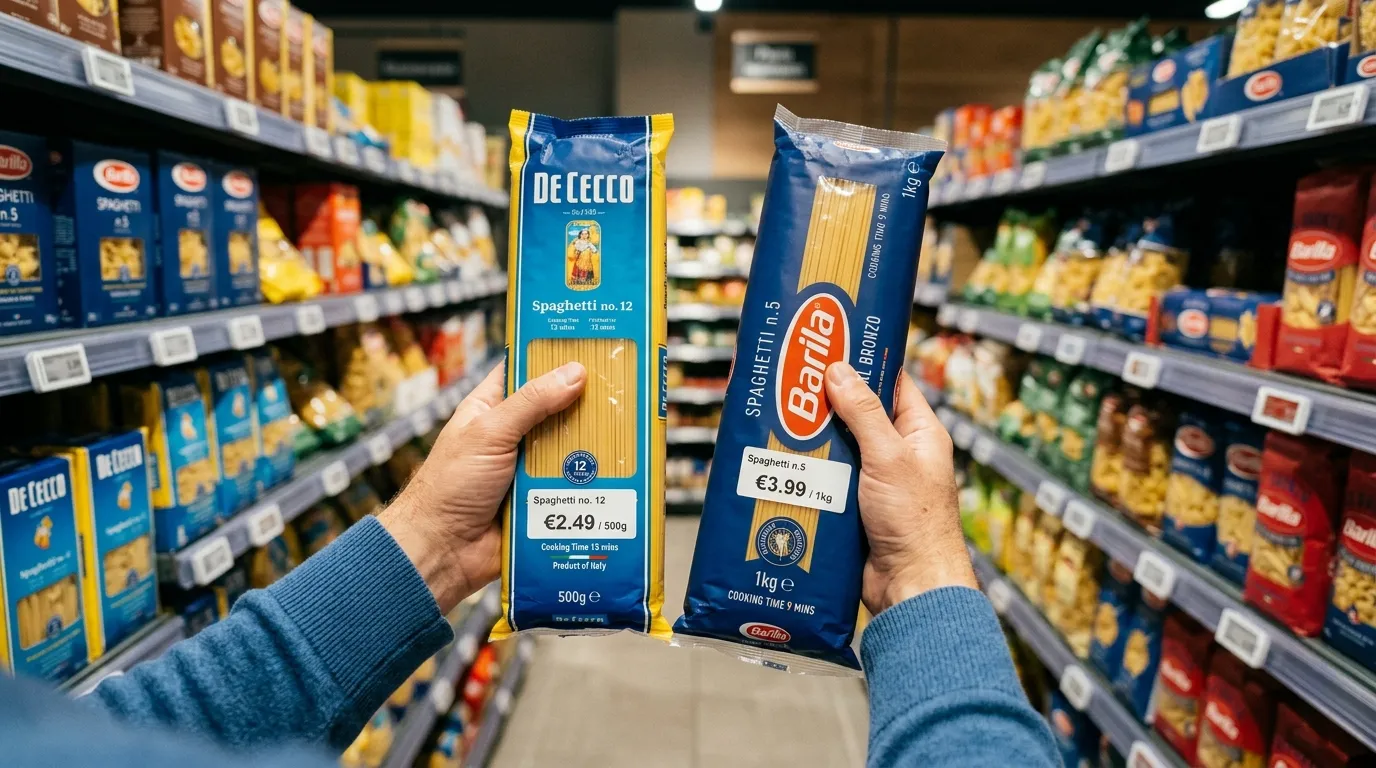
Bottom line first: Metro works best when convenience, assortment, and enough competitive staples line up in the same trip. The problem is that many shoppers let convenience or one flyer item decide too much. A better approach is to compare Metro basket by basket. BarcodeVibe’s Metro page is built for exactly that.
Why Metro needs a different kind of comparison
Metro is not usually competing only on raw discount positioning. It is competing on a different mix:
- a broader, simpler full-service trip;
- proximity in urban or suburban routines;
- enough staple value to keep the basket from drifting too high.
That means the right question is not “Is Metro cheap?” It is “Is Metro good enough on this week’s real basket to justify making it the stop?”
Table: three common Metro decisions
| Metro situation | The question to answer | Why it matters |
|---|---|---|
| Main weekly shop | Are core staples competitive enough to let Metro lead the trip? | A full-service basket only works if the basics stay in range |
| Quick refill stop | Is Metro good enough for convenience without turning into drift? | Short trips can quietly get expensive |
| Flyer-driven visit | Do promoted items still support the total basket? | One special should not distort the whole route |
Which products should lead the Metro comparison
Start with the products that keep showing up: dairy, eggs, bread, cereal, produce, coffee, and one or two pantry basics. Those are the products that tell you whether Metro is merely convenient or actually competitive that week.
That is why BarcodeVibe’s grocery price tracker matters here. Metro is easiest to judge when you stop relying on memory and start tracking the staples that make the basket expensive.
Where Metro matters most
Metro is often part of real grocery routines in Montreal, Toronto, and Ottawa. In those places, Metro is rarely an abstract option. It is one of the stores you can actually reach without rebuilding the whole route.
That is also why comparing Metro with nearby banners matters so much. The trip is usually about tradeoffs between convenience, store quality, and price, not about finding one mythical perfect store.
A practical BarcodeVibe routine for Metro
Use this sequence before the next Metro run:
- open BarcodeVibe’s Metro page;
- compare Metro with the discount or full-service banner you would realistically choose instead;
- check your repeat staples in BarcodeVibe’s grocery price tracker;
- use BarcodeVibe’s barcode scanner in the aisle when a promoted item still needs verification.
This keeps Metro in its proper role: a store to judge with context, not a store to trust blindly because the trip feels easy.
The practical takeaway
Metro is strongest when its convenience and assortment are backed by staples that still make sense for the weekly basket. Start with BarcodeVibe’s Metro page, bring in BarcodeVibe’s grocery price tracker, and let the basket decide whether Metro earns the trip.