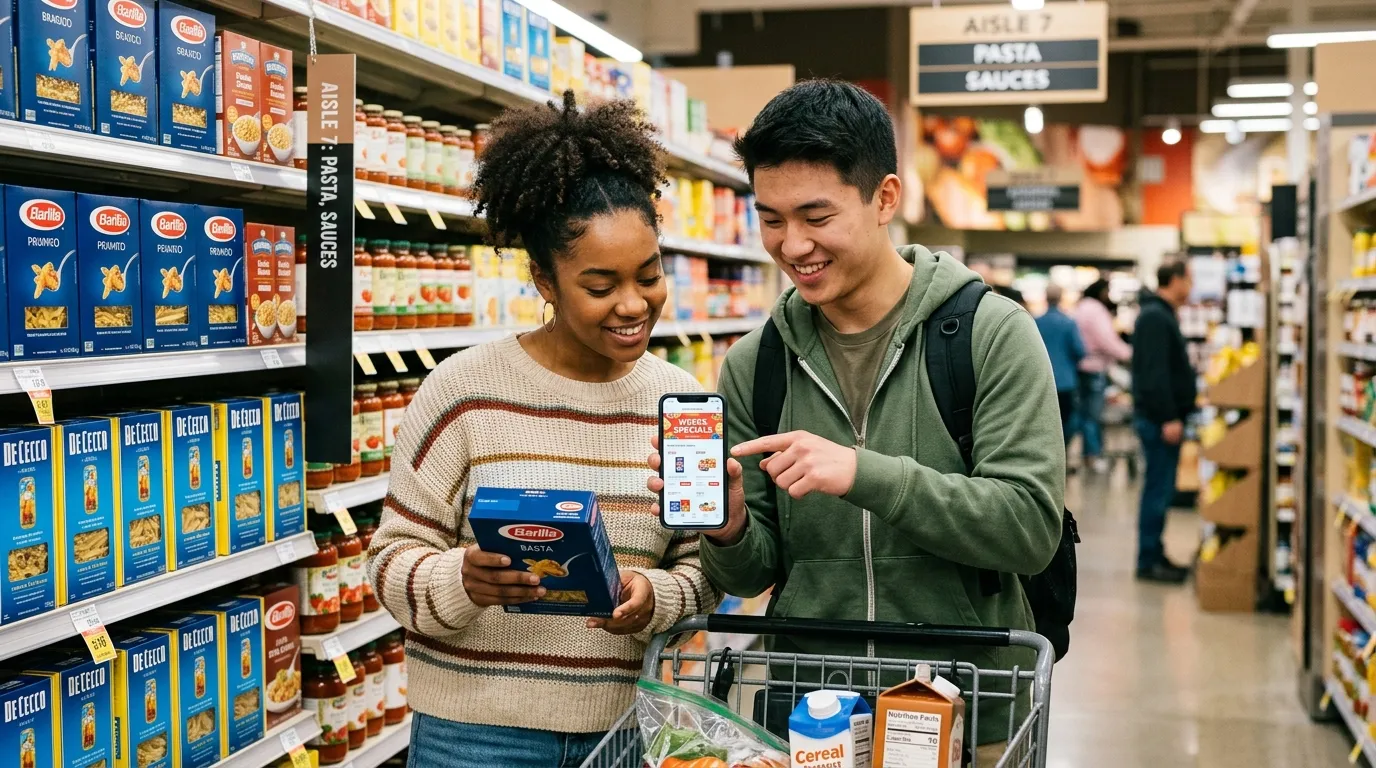
Bottom line first: Montreal grocery savings usually improve when you compare the right neighborhood banners before you leave home, then track the staples you rebuy most often. The reason is simple. Montreal shoppers often move between campus, transit, and smaller urban trips rather than one single suburban stock-up. That makes store choice more dynamic. In 2026, Canada’s Food Price Report 2026 still forecasts food inflation in a 4% to 6% range, while Statistics Canada says food purchased from stores was up 4.1% year over year in February 2026. Statistics Canada’s monthly food table is also useful here because it can be filtered by province or population centre, which is exactly the kind of local context Montreal shoppers need.
Why Montreal needs its own grocery routine
Montreal grocery trips are shaped by urban density. A shopper moving through Plateau, Verdun, or Rosemont does not make the same choices as a shopper making one large weekly suburban run.
Montreal routines are often influenced by:
- campus anchors like McGill, Concordia, or Universite de Montreal;
- metro and walking-based shopping patterns;
- a mix of smaller neighborhood trips and occasional larger restocks.
That is why a Montreal grocery plan should start with realistic banner comparison rather than with a generic “find the best deal” mindset.
Table: how Montreal grocery routines usually split
| Montreal pattern | Banner question to answer first | Why it matters |
|---|---|---|
| Plateau or Verdun neighborhood trip | Is Maxi, Metro, Provigo, or IGA better for today’s staples? | Urban convenience can get expensive quickly |
| Campus-linked grocery run | Which stop fits the route between classes and home? | Time pressure pushes students into weak default choices |
| Bigger weekly restock | Is Walmart or another broader-banner stop worth the detour? | Basket-level savings matter more on larger trips |
This is the real value of BarcodeVibe’s Montreal page: it turns the city into a set of grocery decisions instead of a vague search for deals.
Which Montreal banners deserve early comparison
The first banners most Montreal shoppers should compare are usually:
- Maxi;
- Metro;
- Provigo;
- IGA;
- Walmart.
The right answer changes with the trip. That is why comparison is more valuable than loyalty by habit. One banner may be acceptable for a fast neighborhood stop but weak for a fuller basket.
Why tracking staples matters more than chasing every sale
Montreal shoppers often make smaller, more frequent trips. That increases the risk of paying “just okay” prices again and again without noticing.
The staples that usually deserve tracking first are:
- eggs;
- milk;
- yogurt;
- bread;
- cereal;
- coffee.
That is where BarcodeVibe’s price tracker helps most. Instead of rebuilding your price memory every week, you keep the products that actually move the total visible.
Why BarcodeVibe’s scanner still matters in Montreal
Urban shopping creates more rushed aisle decisions. The scanner matters when:
- the price looks ordinary but feels high;
- the package seems different from what you remember;
- the promoted item may not be the best value format;
- you are making a fast stop and do not want to guess.
That is why BarcodeVibe’s barcode scanner belongs inside a Montreal routine. It is the fastest way to slow down the wrong purchase without slowing down the whole trip.
A realistic Montreal BarcodeVibe routine
For most Montreal shoppers, a strong routine looks like this:
- open BarcodeVibe’s Montreal page before the trip;
- compare the banners that actually fit your neighborhood or route;
- review your staple watch list in BarcodeVibe’s price tracker;
- use BarcodeVibe’s barcode scanner in store when the product needs confirmation.
This keeps Montreal grocery planning grounded in the real city pattern: shorter trips, more route-driven choices, and less tolerance for repeated overpaying.
Split the Montreal basket before you leave
One of the easiest ways to save in Montreal is to decide what kind of trip this is before you walk into the store. If it is a quick refill, keep the list narrow and accept only a limited convenience premium. If it is a true restock, compare banners first and choose one store as the primary basket stop. That matters in a city where neighborhood shopping is common, but a slightly different banner mix can change the value of an entire week. When those trip types blur together, the easy stop becomes the default and the monthly total drifts upward without one dramatic mistake. BarcodeVibe is most useful when it forces that distinction before the cart starts filling up.
What a strong Montreal grocery week looks like
A practical Montreal routine usually looks like this:
- plan one primary basket trip and one lighter refill trip;
- review five to eight repeat staples before the main shop;
- compare only the banners that actually fit your route;
- buy convenience items only when they are truly urgent;
- scan any product whose format, unit value, or shelf tag feels unclear.
That sequence matters because most grocery waste in Montreal is not one catastrophic decision. It is a chain of small default choices repeated every week. In Montreal, the easiest neighborhood choice can still be the wrong choice for the products you rebuy every week. A stronger routine reduces those defaults instead of trying to win every promotion battle.
Which items should lead the comparison
Start the comparison with the products that keep reappearing: milk, eggs, yogurt, bread, coffee, cereal, and one household basic. Those items tell you faster than anything else whether the store in front of you fits the week or only feels convenient. Start on BarcodeVibe’s Montreal page, keep the recurring staples visible in BarcodeVibe’s price tracker, and use BarcodeVibe’s barcode scanner when one product still looks ambiguous in the aisle.
The practical takeaway
Montreal grocery savings usually come from comparing a few realistic banners before you shop, then tracking the staples you rebuy most often. BarcodeVibe is strongest when it helps you do both and adds a fast verification layer in store.
If you want the shortest next step, start with BarcodeVibe’s Montreal grocery page, then connect it to BarcodeVibe’s price tracker and BarcodeVibe’s barcode scanner.