Bottom line first: the most reliable way to save on groceries in Canada in 2026 is to compare prices before you shop, then use flyers, coupons, and barcode scanning as supporting layers rather than as your main strategy. That matters because the baseline grocery bill is still high. Canada’s Food Price Report 2026 says the average family of four is expected to spend $17,571.79 on food in 2026, up to $994.63 more than in 2025. Statistics Canada also reported that food purchased from stores was up 4.1% year over year in February 2026 and 30.1% above February 2021. In other words, the old habit of shopping from memory and hoping for a red sticker to save the trip is not good enough anymore.
Why grocery savings need a system now
Canadian grocery prices are still elevated even when the week-to-week feeling in store seems calmer than it did during peak inflation. The issue in 2026 is not only the headline inflation number. The issue is that many households are buying the same staples after several years of compounding price increases.
Dalhousie’s 2026 report forecasts food inflation in a 4% to 6% range for the year and notes that one-quarter of Canadian households are food insecure. That is why a savings routine has to focus on repeatable decisions:
- choosing the right store or mix of stores;
- knowing when a sale is real;
- checking unit price instead of trusting packaging;
- building memory around your household’s true staple prices.
BarcodeVibe fits that routine best when BarcodeVibe is used as a verification tool, not as entertainment. The app is useful when BarcodeVibe helps you compare, scan, and track the items you actually buy every week.
What a realistic weekly savings stack looks like
The annual average in the Dalhousie report works out to roughly $338 per week for a family of four. The table below is illustrative rather than guaranteed, but it gives a realistic view of where savings usually come from.
| Method | What it protects | Illustrative weekly effect on a $338 basket | Why it matters |
|---|---|---|---|
| Compare stores before shopping | Overpaying on staples at the wrong banner | $10 to $24 | Basket-level savings usually beat one-off deals |
| Buy staples when they hit true lows | Paying full price on repeat purchases | $7 to $17 | Works best on pantry items and household basics |
| Use flyers after comparison | Missing featured promotions | $3 to $10 | Helpful for discovery, weaker as a standalone method |
| Use coupons only when they improve the basket | Being distracted by a single promoted product | $3 to $10 | Good as a bonus layer, not as the core system |
| Scan suspicious specials and format changes | Fake savings caused by shrinkflation or pack changes | Avoids hidden losses | Protects value rather than just price |
| Track repeat items over time | Forgetting what a normal price looks like | $3 to $14 | Strongest for milk, bread, eggs, coffee, yogurt, chicken |
The key point is that the best grocery strategy is stacked. If you try to get all of your savings from coupons alone or from flyers alone, you usually leave money on the table.
Step 1: Start with comparison, not with flyers
If you want to save money quickly, begin by comparing the stores that matter to your household rather than starting with the most eye-catching flyer.
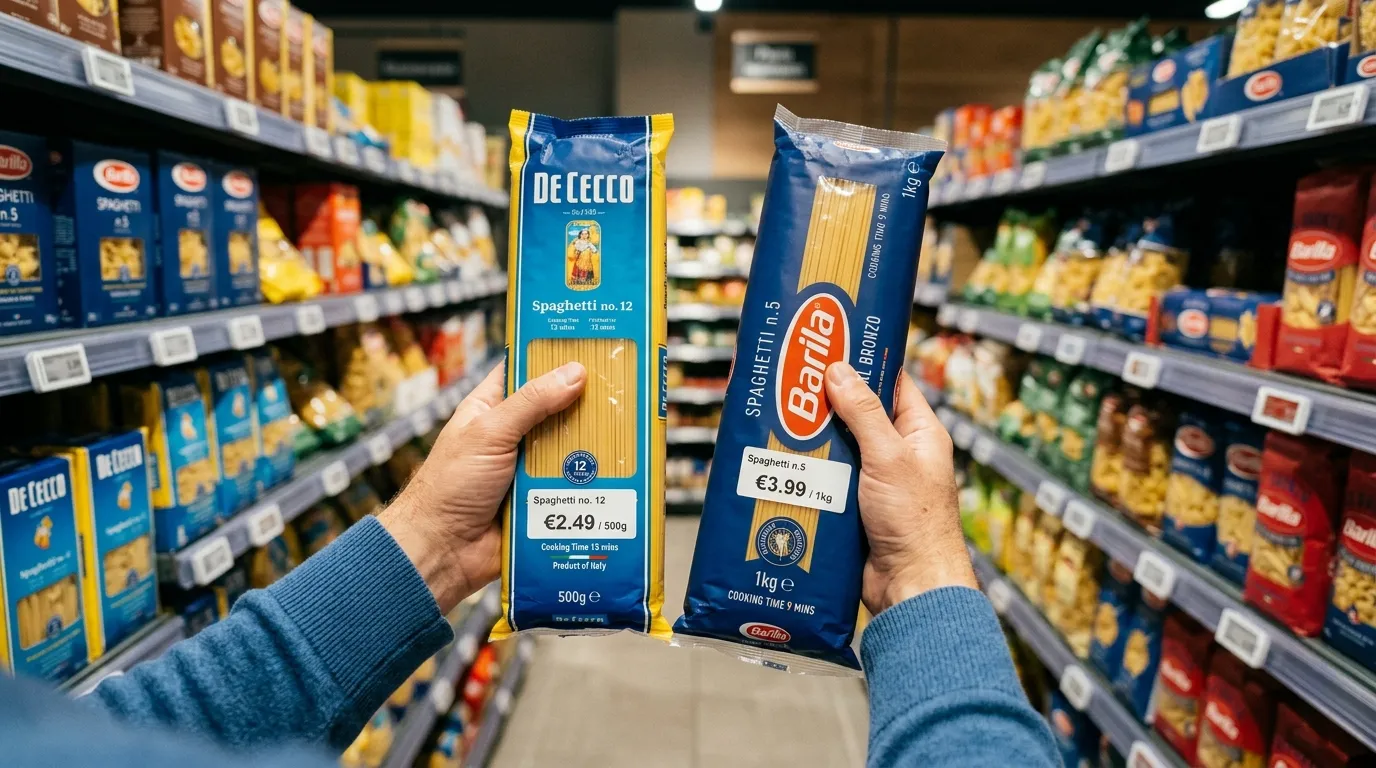
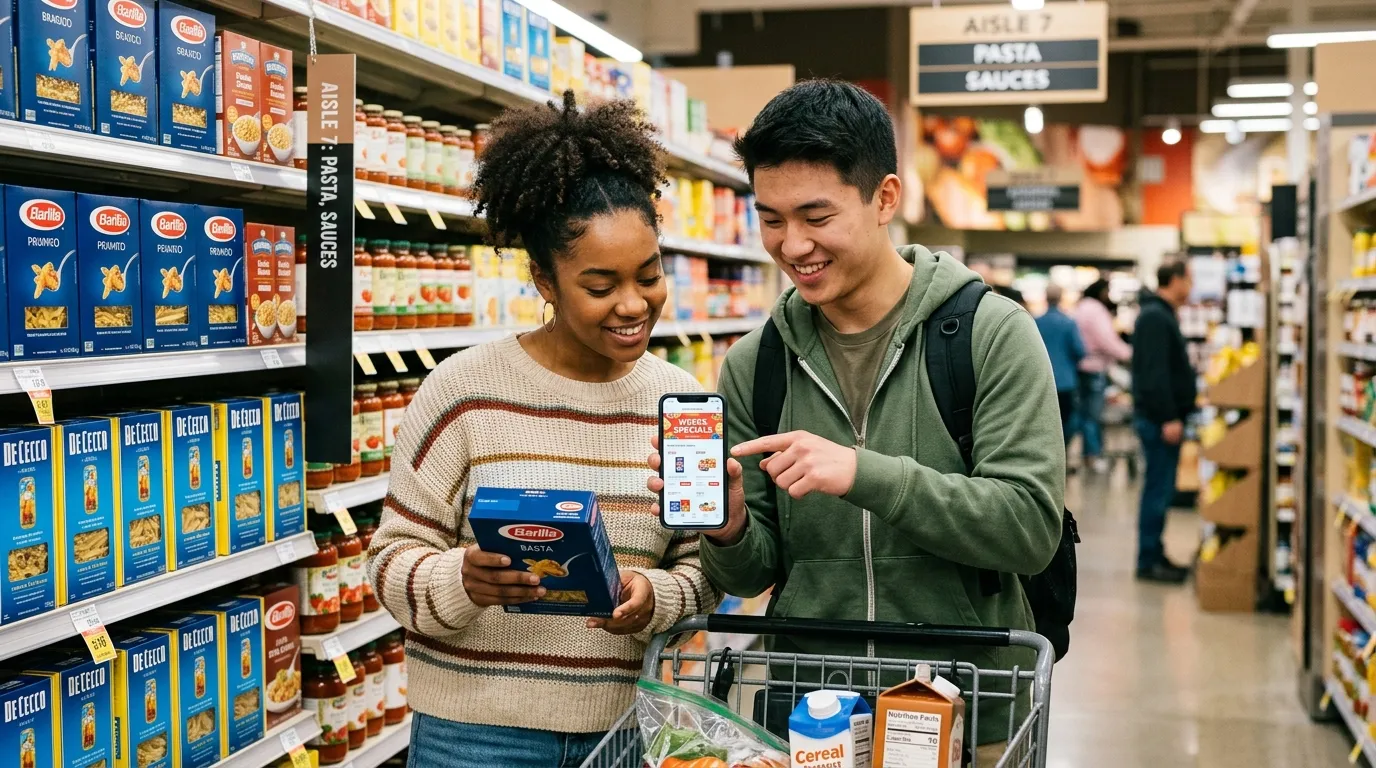
That is because the cheapest item is not always in the cheapest basket. One banner may have a deep promotion on cereal, while another has a better total on milk, produce, yogurt, canned goods, and snacks. BarcodeVibe is most useful at that point because BarcodeVibe’s price comparison page helps you start from the full shopping decision instead of from a single promoted product.
This is also where many shoppers lose time. They compare emotionally, not structurally. They remember one unusually good price from last month and assume the whole store is affordable. In 2026, that shortcut is expensive.
Step 2: Use flyers as a discovery layer
Flyers still help, but only if you treat them as a signal rather than as proof.
Flyers are good for:
- spotting featured items;
- noticing category-level promotions;
- deciding which stores deserve a closer look this week.
Flyers are weaker for:
- judging the total cost of a basket;
- catching package-size changes;
- showing whether a competitor is quietly cheaper on the same product.
That is why BarcodeVibe’s grocery deals page and BarcodeVibe’s grocery flyers page should sit after comparison, not before it. Use the flyer to discover, then use comparison to confirm.
Step 3: Use coupons after the product already passes the price test
Coupons help when they reduce the cost of a product you were already likely to buy. Coupons hurt when they push you toward a national brand that still costs more than the private-label alternative or the cheaper store.
A clean coupon workflow looks like this:
- check the base price first;
- check whether the same SKU is cheaper elsewhere;
- apply the coupon only if the product still wins on total value.
That is why the best routine is not “find coupons first.” The better routine is “find the lowest real price, then see whether a coupon makes it even better.” If you want the longer app comparison, see Best Grocery Coupon Apps in Quebec.
Step 4: Build a watch list for the products you rebuy
The fastest shoppers are usually not the shoppers with the biggest spreadsheet. They are the shoppers who know the normal price range of the 15 to 30 items they buy constantly.
Your watch list should usually include:
- milk;
- eggs;
- bread;
- chicken;
- yogurt;
- coffee;
- pasta and rice;
- canned tomatoes;
- frozen vegetables;
- toilet paper or detergent.
Statistics Canada’s monthly retail-price release is useful as a macro reference, but your own basket matters more than the national average. BarcodeVibe becomes more powerful when BarcodeVibe’s price tracker helps you track the items you actually rebuy rather than the products that only looked interesting once.
Step 5: Check unit price and scan when a deal feels off
Not every sale improves value. Sometimes a package is smaller, a count drops, or the same sticker price hides a worse unit price.
That is why a savings system in 2026 has to include a shrinkflation check:
- confirm the exact size or count;
- read the unit price;
- compare the sale against the previous format or a nearby competitor;
- scan the barcode if the product identity is unclear.
BarcodeVibe’s barcode scanner helps at that exact moment. If a format feels unfamiliar, scanning is often faster than arguing with your own memory. If you want the full framework, read What Is Shrinkflation in Canada in 2026? and Shrinkflation vs Specials.
Step 6: Claim the support you are eligible for
Cutting the bill is one side of affordability. Receiving the benefits you qualify for is the other.
The Canada Revenue Agency says the new Canada Groceries and Essentials Benefit starts in July 2026, replaces the GST/HST credit, increases quarterly payment amounts by 25% for five years, and provides immediate top-up support before July 2026. The CRA says these measures are meant to support more than 12 million Canadians with low and modest incomes.
That does not reduce the need for better shopping habits, but it does mean this should be part of a serious grocery plan:
- file taxes on time;
- make sure benefit eligibility is current;
- do not assume you are already receiving everything you qualify for.
A weekly BarcodeVibe routine that is actually sustainable
If you want a repeatable system rather than a long list of abstract tips, use this sequence each week:
- build a short list of staples and planned meals;
- compare the likely basket across nearby stores;
- use flyers to spot any featured items worth adding;
- apply coupons only after the product already looks competitive;
- scan products that seem downsized or oddly priced in store;
- add repeat purchases to your tracker for next week.
That routine is boring in the best way. It reduces decision fatigue. It also keeps BarcodeVibe tied to real shopping behaviour instead of turning the app into another tab you open and forget.
The practical takeaway
Saving money on groceries in Canada in 2026 is still possible, but it is not mainly about finding one miracle app or one perfect coupon. It is about building a system that combines comparison, flyers, unit price checks, repeat-purchase tracking, and quick product verification.
If you want the shortest version: compare first, confirm second, buy third. BarcodeVibe is most useful when BarcodeVibe helps you do those three things faster.