Bottom line first: in Canada, grocery flyers are better for early discovery, while a barcode scanner app is better for product-level decisions in store or right before checkout. That distinction matters more in 2026 because the grocery bill is still elevated. Canada’s Food Price Report 2026 says the average family of four is expected to spend $17,571.79 on food in 2026, up to $994.63 more than in 2025. Statistics Canada also reported that food purchased from stores was up 4.1% year over year in February 2026 and 30.1% above February 2021. In that environment, the wrong tool at the wrong moment creates unnecessary friction and unnecessary overpaying.
What flyers do well
Flyers still have a clear job. They help you discover which retailers are promoting which categories this week.
That makes flyers useful for:
- spotting featured promotions before you build a list;
- checking whether a store deserves a closer look this week;
- seeing broad patterns in produce, pantry items, or household basics.
According to Flipp’s help center, flyer workflows are built around browsing, searching, clipping, and planning. That is a good discovery workflow. It is not the same as a verification workflow.
What a barcode scanner app does better
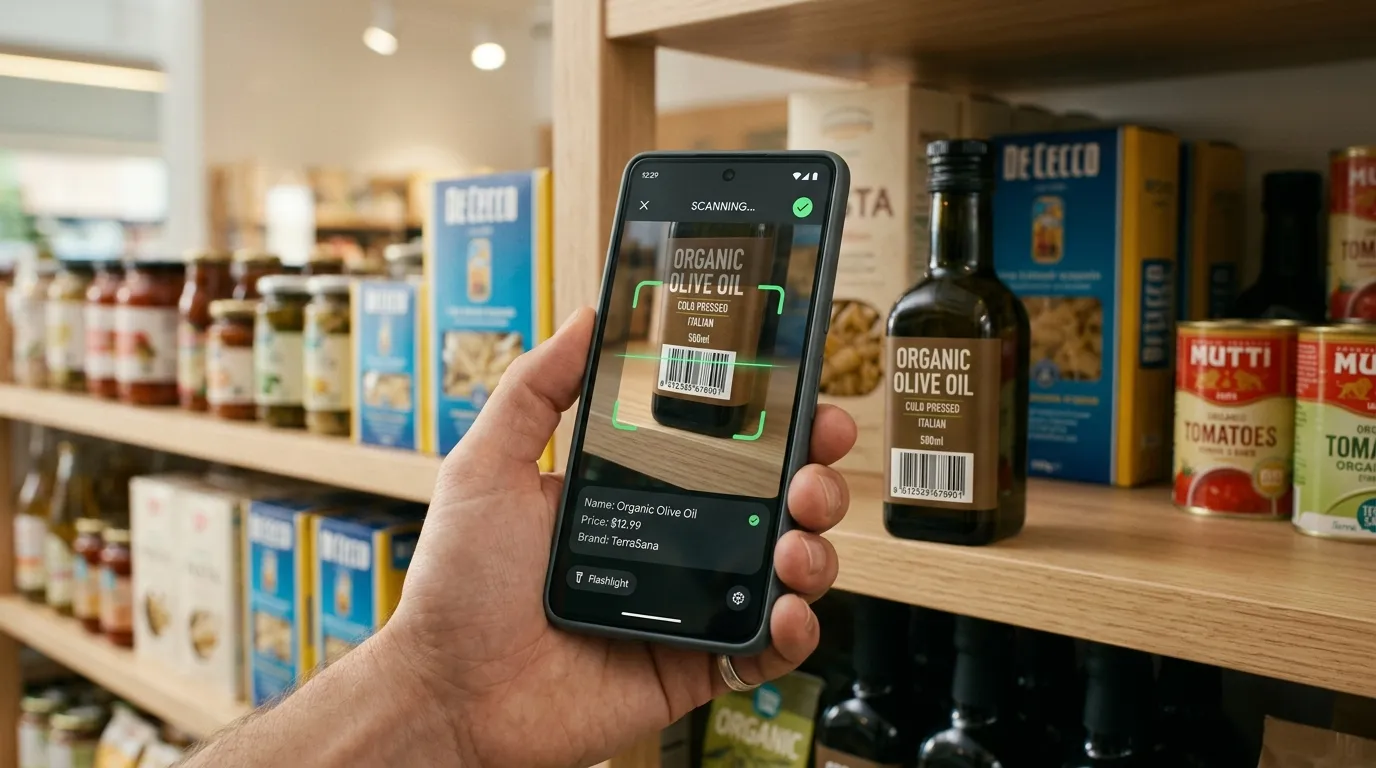
A barcode scanner app becomes stronger when the question changes from “what is on promotion?” to “is this exact product worth buying right now?”
That is where BarcodeVibe is more useful because BarcodeVibe helps with:
- checking the exact SKU in your hand;
- reviewing price context before you trust the shelf tag;
- deciding whether to buy now, wait, or switch products;
- connecting the scan to price history and shrinkflation context.
Flyers rarely solve those questions well because flyers are built around promoted items, not around product verification in the aisle.
Table: flyers vs barcode scanner app
| Grocery task | Flyers | Barcode scanner app |
|---|---|---|
| Discover weekly promotions | Strong | Useful, but not the main strength |
| Check one exact SKU in store | Weak | Strong |
| Catch format confusion or shrinkflation risk | Weak | Strong |
| Decide whether the current shelf price is normal | Weak | Stronger when tied to price history |
| Build a route before leaving home | Useful | Useful when paired with comparison |
The practical takeaway is simple: flyers help you find candidates, while a scanner helps you verify the product you are about to buy.
Why the distinction matters more now
When food prices are stable, a sloppy workflow is less expensive. In 2026, the compounding from the last few years makes sloppy grocery decisions costlier.
Dalhousie’s report forecasts food inflation in a 4% to 6% range for 2026. That means a shopper who still relies only on flyer discovery can miss:
- a smaller package at the same price;
- a weak promotion on a familiar brand;
- a better option at a different banner;
- a product that looks discounted but is still above its recent normal.
BarcodeVibe is most useful exactly when it helps interrupt those mistakes.
When flyers should lead
Start with flyers when you are at the beginning of the grocery cycle and need a quick view of the market.
That means flyers are a reasonable first step when:
- you are planning tomorrow’s or this weekend’s trip;
- you want to know which banners are featuring produce or meat;
- you are building a rough shopping list before comparison.
In those cases, flyer discovery still saves time. BarcodeVibe does not need to replace that. BarcodeVibe becomes more valuable after that first discovery pass.
When BarcodeVibe should lead
Start with BarcodeVibe when you are already close to buying and need better product context.
BarcodeVibe should lead when:
- you are standing in the aisle and the shelf price feels wrong;
- the packaging seems different from what you remember;
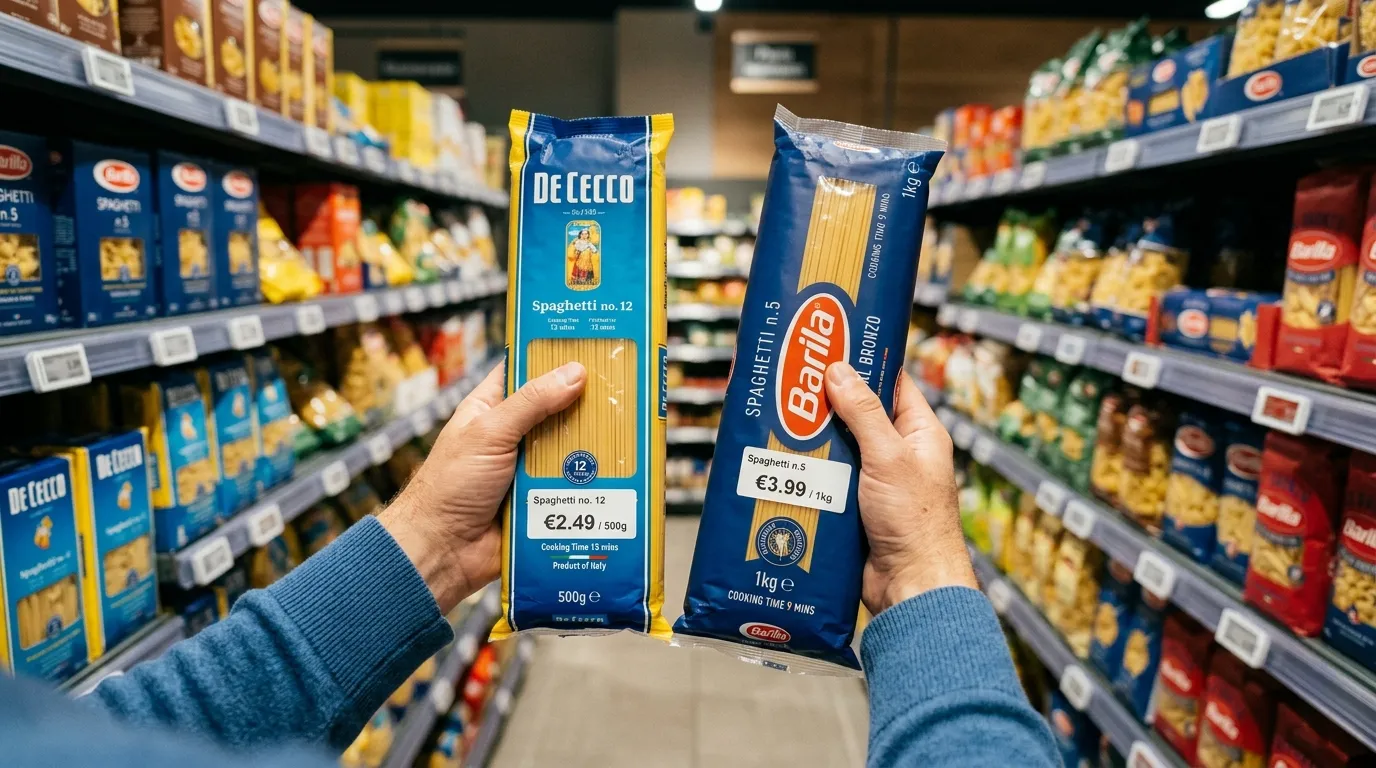
- the promotion looks good but the unit value may be worse;
- you want to check whether this product is better now or whether it is smarter to wait.
That is where BarcodeVibe’s barcode scanner page and BarcodeVibe’s price tracker page work better than a flyer-only workflow.
The strongest workflow is stacked, not ideological
The right answer is not “flyers only” or “scanner only.” The strongest grocery routine in Canada usually looks like this:
- use flyers to discover which stores deserve attention this week;
- compare likely staples before leaving home;
- use BarcodeVibe’s scanner in store when the exact product needs verification;
- keep repeat purchases on a watch list for next week.
This sequence makes both tools more useful. Flyers generate candidates. BarcodeVibe helps you avoid trusting the wrong candidate.
A quick aisle decision rule
When you are already in front of the shelf, ask three questions in order:
- am I still deciding between stores, or am I deciding on this exact product?
- is the product clearly comparable to what I bought before?
- if I buy it now, am I doing so because the evidence is good or because I am in a hurry?
If the first question is still open, return to comparison. If the second or third question is open, the scanner is the better tool. This rule matters because flyers and scanners solve different layers of the same grocery problem. BarcodeVibe works best when flyers narrow the field first and the scanner handles the final verification step.
What this means for Canadian shoppers
If you are planning a family basket, flyers can still help at the top of the funnel. If you are a student making faster aisle decisions, BarcodeVibe’s scanner is often the more useful tool. If you care about repeat products, price history, or shrinkflation, the scanner-plus-tracker workflow is usually stronger than a flyer-first workflow alone.
That is why the best answer in 2026 is pragmatic: use flyers to discover, then use BarcodeVibe to verify. If you want to go deeper, start with BarcodeVibe’s barcode scanner app page, then connect it to BarcodeVibe’s price comparison page and BarcodeVibe’s price tracker page.