Bottom line first: the best price tracker app for groceries in Canada is the one that helps you judge repeat purchases, not the one that simply accumulates the biggest chart archive. A grocery price tracker becomes valuable when it tells you whether today’s price is low, normal, or weak for the product you actually rebuy. That need is still obvious in 2026. Canada’s Food Price Report 2026 forecasts food inflation in a 4% to 6% range, while Statistics Canada’s monthly food-price table continues to publish retail food prices by geography and product. That means the right tracker app is not just a nice extra. It is a way to stop buying blind.
What a grocery price tracker needs to do
Most grocery price trackers fail because they make the tracking experience look impressive without improving the actual decision.
The best tracker app should help you:
- keep a short watch list of repeat products;
- see enough history to judge the price in front of you;
- connect that history to the store choice you are about to make;
- verify the exact product if the package or format changed.
That is why BarcodeVibe is more useful when BarcodeVibe’s price tracker, price comparison, and barcode scanner work together.
Why raw data volume is not the main criterion
It is easy to be impressed by scale claims. For example, Many Penny’s “The Power of Data” emphasizes real-time comparisons, historical price points, promotions, and broad store coverage. That is useful context about what a price-tracking product can contain. But volume by itself is not the deciding factor for most Canadian shoppers.
The real question is this: does the app help you make the next grocery decision faster and better?
If the answer is no, then the tracker is mostly decorative.
Table: what a strong grocery tracker should solve
| Tracker job | Why it matters | What the app should help you do |
|---|---|---|
| Track repeat staples | Repeat items create most of the waste from bad timing | Keep a short, stable watch list |
| Read recent history | Memory alone is unreliable | Classify today’s price as low, normal, or high |
| Connect tracking to store choice | A good price at the wrong store may still be weak at basket level | Compare before you shop |
| Verify the exact product | History only helps if the product is actually comparable | Scan when the package looks off |
That fourth row is why tracker-only apps are rarely enough. Grocery price history is only useful when it stays connected to the actual product.
The best grocery tracker focuses on repeat items
The right watch list is usually shorter than people think. Strong candidates include:
- eggs;
- milk;
- yogurt;
- coffee;
- bread;
- cereal;
- chicken;
- detergent or diapers.
These products work well because they are bought often enough for history to matter. Statistics Canada’s food table exists for exactly this kind of recurring observation: it tracks retail food prices across geography and time. A shopper does not need every line from the table. A shopper needs the same discipline on the products that drive their basket.
Why tracking alone is not enough
A tracker without comparison can tell you that a product is expensive, but not whether another store nearby is better today. A tracker without scanning can tell you that a product used to cost less, but not whether the product in your hand is still the same size or format.
That is why BarcodeVibe works better as a stack:
- track the products you rebuy;
- compare likely stores before the trip;
- scan the exact SKU when something looks unfamiliar or suspicious.
The tracker is the memory. The comparison is the routing layer. The scanner is the verification layer.
How to evaluate a price tracker app quickly
If you are comparing apps, ask four questions:
- can it handle the repeat staples I buy every week?
- does it make the recent price movement understandable at a glance?
- can I connect the history to today’s store choice?
- can I verify the exact product if the format changed?
If an app only answers the first two questions, it is probably too narrow. If it answers all four, it is much closer to what Canadian grocery shoppers actually need.
A practical BarcodeVibe tracker routine
Use BarcodeVibe like this:
- build a short list in BarcodeVibe’s price tracker;
- review the items that move your basket most;
- compare likely store options before a larger trip;
- use BarcodeVibe’s barcode scanner when the exact product needs confirmation.
This routine is practical because it keeps the number of decisions low while improving the quality of the ones that matter.
What a useful tracker view should look like
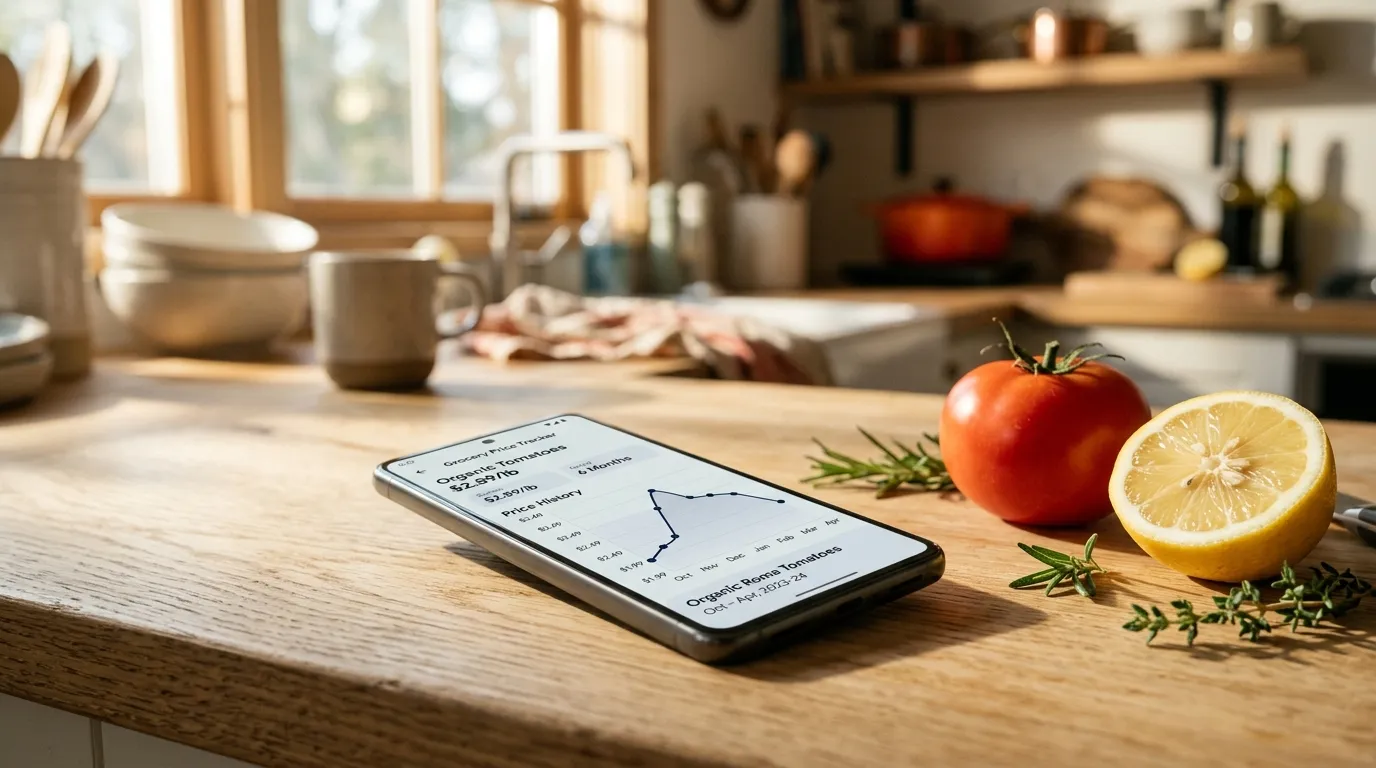
A useful grocery tracker screen does not need dozens of lines. It needs a small set of products with a clear interpretation:
- buy now;
- normal price, buy only if needed;
- hold off and compare stores.
That framing is what turns history into action. If a tracker cannot tell you which products deserve attention this week, it is asking you to do too much work yourself. BarcodeVibe is stronger when the tracker shortens the pre-trip review to a few repeat staples, then hands the tougher cases to comparison or scanning.
The practical takeaway
The best price tracker app for groceries in Canada is not the one with the loudest database story. It is the one that helps you read repeat staples, connect price history to today’s store decision, and verify the product when needed. In that sense, BarcodeVibe is strongest when its tracker, comparison, and scanner stay connected.
If you want the shortest next step, open BarcodeVibe’s price tracker, then tie it to BarcodeVibe’s price comparison page and BarcodeVibe’s barcode scanner.