Bottom line first: a grocery special is only a real deal if the unit price improves. In 2026, that matters more than ever for Canadian shoppers. Canada’s Food Price Report 2026 says the average family of four is expected to spend $17,571.79 on food in 2026, up to $994.63 more than in 2025, while food prices are 27% higher than five years ago. At the same time, Statistics Canada reported that food purchased from stores was up 4.1% year over year in February 2026 and 30.1% above February 2021. In that environment, a loud sale sign is not enough. BarcodeVibe is most useful when it helps you check size, price history, and product identity before the special goes into your basket.
The difference between a special and shrinkflation
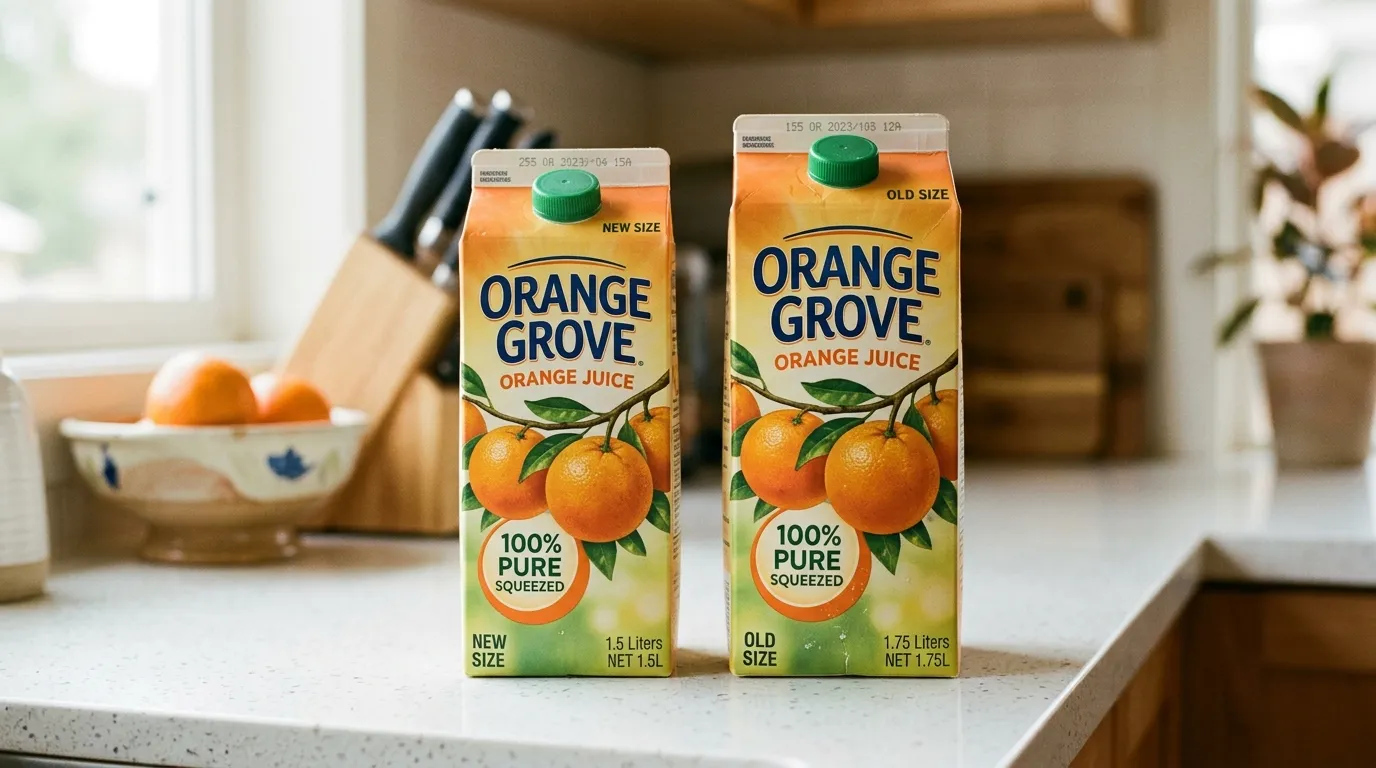
A special is supposed to lower the effective cost of a product for a limited time. Shrinkflation does the opposite: it protects the sticker price while reducing the amount you receive. The problem is that both can appear on the same product at the same time.
That is why shoppers should stop asking only, “Is this on sale?” and start asking, “Is the price per gram, millilitre, or unit actually better than before?”
Research supports that caution. In Marketing Science, Aljoscha Janssen and Johannes Kasinger found that about 1.92% of products in their scanner-data sample were downsized and that downsizing was more than 5x as prevalent as upsizing when looking at sales volume. Their result is based on the U.S. grocery market, not Canada specifically, but the logic matters for Canadian shoppers because it shows that package downsizing is not a fringe event. It is a recurring retail pattern.
Why shoppers get fooled by the shelf tag
Most people remember the last price they paid more easily than the last package size they bought. That is exactly why shrinkflation works.
If the cereal box used to feel “about this size” and the new shelf tag says save $1, your brain often treats the sale as a win before you have checked whether:
- The box is smaller.
- The product is a slightly different UPC or format.
- The sale price is still worse on a unit basis than the previous version.
BarcodeVibe should be part of that check, not because BarcodeVibe magically solves grocery inflation, but because BarcodeVibe gives you a faster way to look at the product itself rather than trusting the merchandising around it.
The first filter: check the unit price
The fastest way to judge a special is to compare the unit price. Canadian stores already display enough information to make this possible on many products, but shoppers often skip it because the shelf tag is more visible than the smaller unit-price line.
Use this rule:
- Read the sale price.
- Read the package size.
- Convert to cost per
100 g, per kilogram, per litre, or per unit. - Compare that number with the product’s usual price history or with the same product at another store.
If the unit price does not improve, the “special” is not the main story. The main story is the packaging change.
A simple way to compare specials when formats change
The table below is illustrative, but it shows exactly how shoppers should read a questionable promotion.
| Scenario | Shelf price | Size | Unit price | Verdict |
|---|---|---|---|---|
| Pasta sauce, regular week | $4.49 | 700 mL | $0.64 per 100 mL | Baseline |
| ”Special” price, same size | $3.99 | 700 mL | $0.57 per 100 mL | Real deal |
| ”Special” price, downsized jar | $3.99 | 620 mL | $0.64 per 100 mL | Not meaningfully better |
| ”Special” price, deeper downsizing | $3.99 | 560 mL | $0.71 per 100 mL | Worse deal despite the sale |
The shelf sign only tells you the second column. The third and fourth columns are where the real decision happens.
Use BarcodeVibe like a deal filter, not like entertainment
BarcodeVibe is most useful when it sits between impulse and checkout. A good workflow looks like this:
- Scan the product with BarcodeVibe’s barcode scanner when a format feels unfamiliar.
- Check whether the same product, size, or UPC appears elsewhere at a better unit price.
- Open BarcodeVibe’s price tracker page or your saved history if this is a repeat-purchase item.
- Compare the “special” with the product’s normal role in your basket, not just with the red sticker.
That process is slower than grabbing the first sale sign you see, but it is much faster than repeatedly overpaying on the staples you buy every week.
What matters more in 2026
The reason this topic deserves more attention now is not only shrinkflation itself. It is the combination of shrinkflation with already elevated grocery costs.
Dalhousie University’s 2026 report says one-quarter of Canadian households are food insecure. That means weak specials are not a small annoyance. They directly undermine families, students, and lower-income shoppers who are actively trying to protect the basket.
Statistics Canada also noted that beef prices were a major driver of grocery inflation in February 2026, with fresh or frozen beef up 13.9% year over year. In practice, when high-volatility categories are already under pressure, the cost of misreading a promotion becomes even more expensive.
Questions to ask before you buy
When you see a special, ask these questions in order:
- Is this the same package size I usually buy?
- Is the unit price lower, or just the sticker price?
- Has this product changed format, recipe, count, or weight?
- Is BarcodeVibe showing a better nearby price on the same reference?
- If this is still not clearly better, would a store brand or different pack size give stronger value?
That checklist is more useful than memorizing random “good prices” because it forces you to evaluate the product as it exists today.
The better decision is basket-level value
A real deal is not the product with the most aggressive red label. A real deal is the one that lowers the total cost of your basket without quietly lowering the amount you take home.
If you want the broader framework, start with What Is Shrinkflation in Canada in 2026?. If you want to make better decisions in the store this week, combine BarcodeVibe’s shrinkflation page, BarcodeVibe’s barcode scanner, and BarcodeVibe’s price tracker. That is the difference between noticing a special and understanding whether it deserves your money.