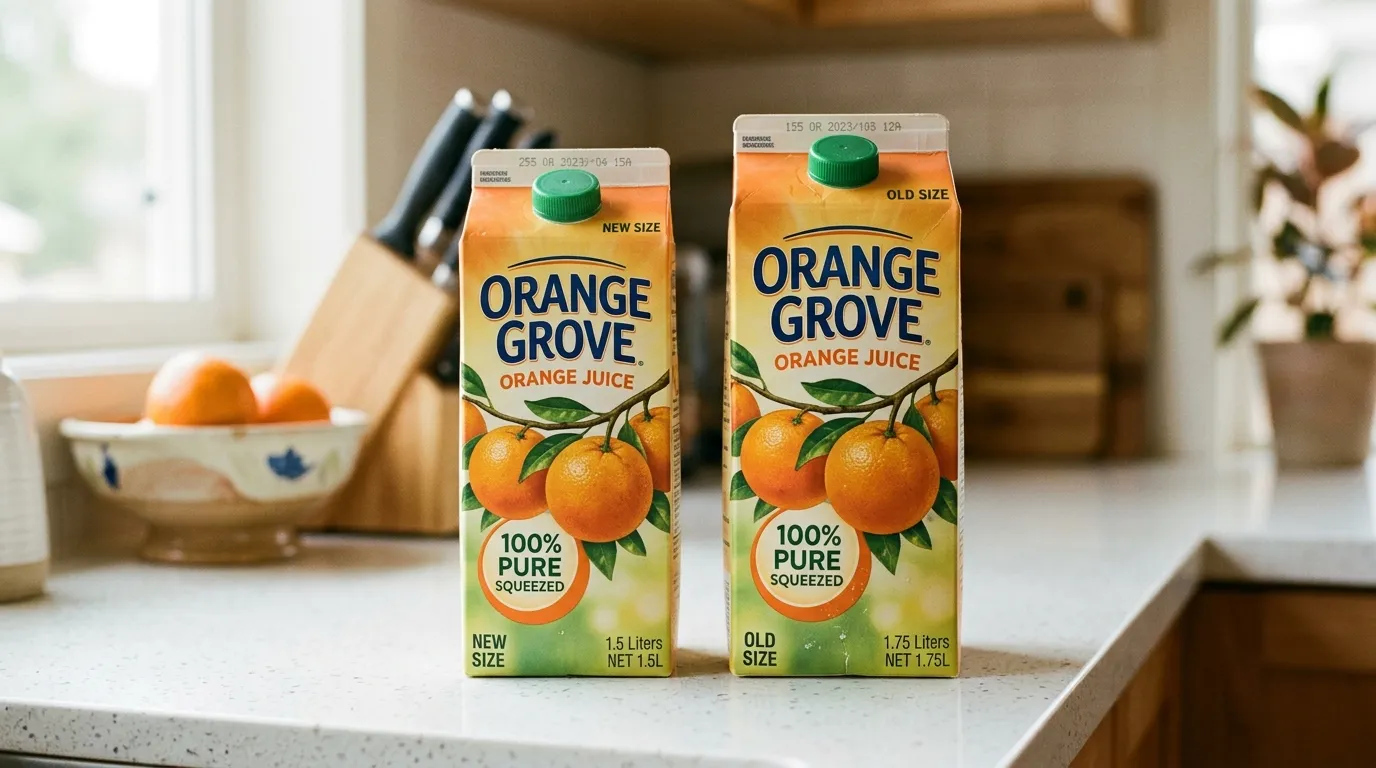
Shrinkflation means a brand gives you less product without giving you a matching price cut. In grocery shopping, that usually means the package gets smaller while the sticker price stays the same or rises only slightly. In Canada in 2026, shrinkflation matters because the underlying food bill is already high. Canada’s Food Price Report 2026 says the average family of four is expected to spend $17,571.79 on food in 2026, up to $994.63 more than in 2025, while food prices are 27% higher than they were five years earlier. Statistics Canada reported that food purchased from stores was up 4.1% year over year in February 2026 and 30.1% above February 2021. So if a package quietly shrinks, the damage compounds on top of already expensive groceries.
What shrinkflation actually looks like
Shrinkflation is not only about dramatic size cuts. Most of the time it shows up in quieter ways:
- a cereal box loses a small amount of weight;
- a snack bag keeps the same price but drops a few grams;
- a multipack keeps its branding but loses one unit;
- a container changes shape and feels similar while holding less product.
The point is not that every package change is deceptive. The point is that shoppers often notice price faster than quantity, and that gap is where shrinkflation hides.
Why the topic matters more in Canada in 2026
The 2026 Canadian context makes shrinkflation more expensive for households than it looks at first glance.
Dalhousie University’s report says:
- food prices are forecast to rise
4%to6%in 2026; - the average family of four could spend
$17,571.79; - one-quarter of Canadian households are considered food insecure.
At the same time, Statistics Canada reported that fresh or frozen beef prices rose 13.9% year over year in February 2026. That matters because the categories that drive weekly grocery stress are often the same categories where shoppers are most vulnerable to weak specials, smaller formats, or repeated repurchases on autopilot.
In other words, shrinkflation is not just annoying. It is budget-distorting.
What the research says
Academic evidence now supports what many shoppers have felt anecdotally. In Shrinkflation and Consumer Demand, published in Marketing Science, Aljoscha Janssen and Johannes Kasinger analyzed a decade of retail scanner data and found that roughly 1.92% of products in their sample were downsized. They also found that downsizing was more than 5x as prevalent as upsizing when measured through sales.
That paper is based on U.S. scanner data, not Canadian store-level data. But it is still relevant for Canadian grocery strategy because it confirms three things:
- package downsizing is frequent enough to matter;
- it often happens without a corresponding price drop;
- consumers respond more strongly to visible price changes than to size changes.
That third point is exactly why BarcodeVibe should be used as a product-checking workflow, not only as a general savings app.
How shrinkflation hurts a grocery basket
Shrinkflation does not always blow up a budget in one shopping trip. More often, it leaks money out of the basket over time.
If a family buys yogurt, cereal, coffee, bread, pasta sauce, and snacks every week, even a small loss in quantity across a few staples can raise the effective cost of the household routine without triggering the same emotional reaction as a visible price jump.
This is why shrinkflation is especially important for:
- families buying the same staples repeatedly;
- students with tight weekly budgets;
- shoppers who rely on memory rather than active comparison;
- anyone using promotions without checking unit price.
The fastest way to spot shrinkflation
The most reliable method is not guessing. It is comparison.
Use this sequence:
- Check the total price.
- Check the size, count, or volume.
- Convert the product to a unit price.
- Compare that unit price to the previous format or a nearby alternative.
- Scan the product if you are not sure whether it is the same reference.
That is where BarcodeVibe’s barcode scanner becomes useful. BarcodeVibe helps you anchor the decision to the product itself rather than to the marketing around the product.
Unit price is the language shrinkflation hates
If you only compare sticker price, shrinkflation can win. If you compare unit price, shrinkflation becomes easier to expose.
Here is an illustrative example:
| Product state | Shelf price | Size | Unit price | What it means |
|---|---|---|---|---|
| Old package | $5.49 | 750 g | $0.73 per 100 g | Baseline |
| New package, same price | $5.49 | 680 g | $0.81 per 100 g | Hidden increase |
| New package, sale tag | $4.99 | 680 g | $0.73 per 100 g | Only back to baseline |
| Competing store | $5.29 | 750 g | $0.71 per 100 g | Best real value |
That table shows why not every sale is a savings event. Sometimes a sale simply disguises the fact that the package already got weaker.
BarcodeVibe’s role in a shrinkflation routine
BarcodeVibe is useful against shrinkflation when you use the features together:
- Use BarcodeVibe’s shrinkflation page to understand the pattern and the warning signs.
- Use BarcodeVibe’s barcode scanner in-store when a product feels different from the last purchase.
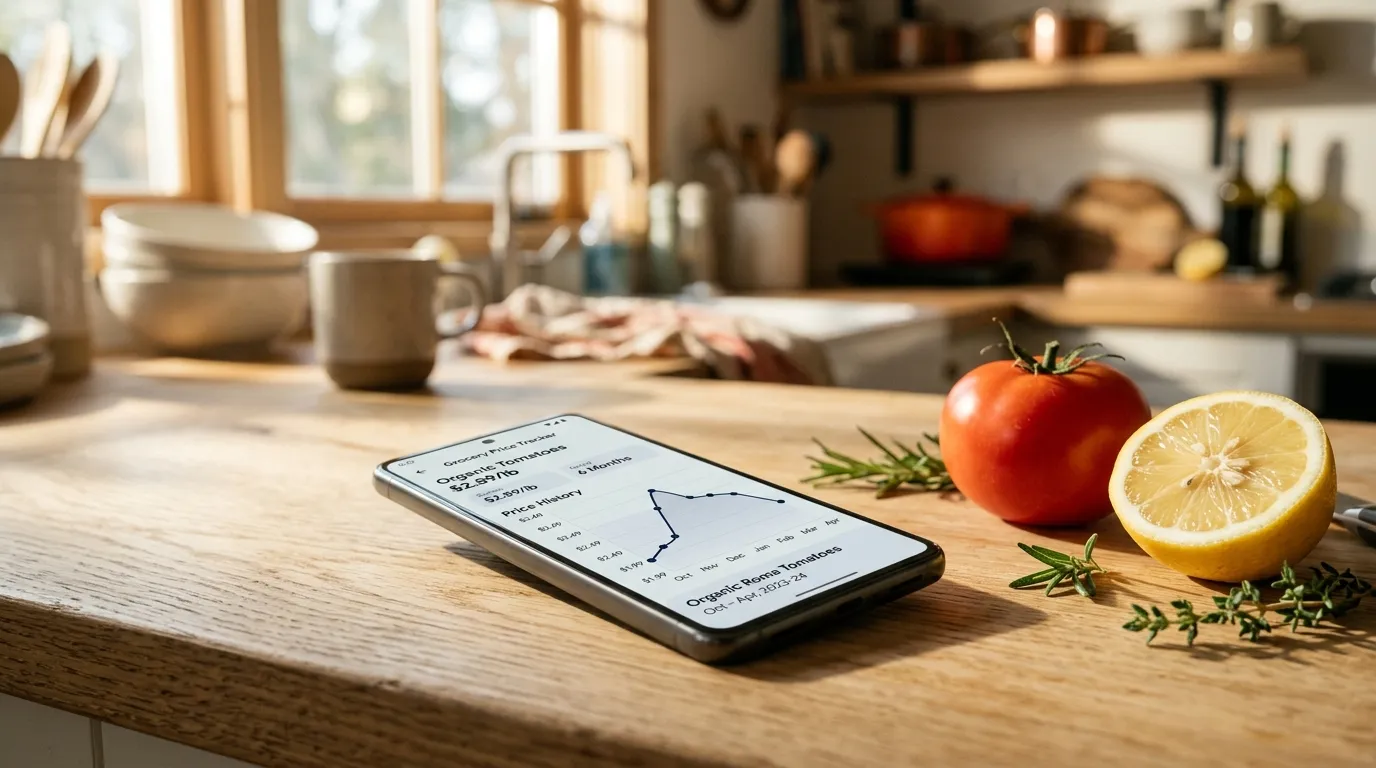
- Use BarcodeVibe’s price tracker for the items your household buys again and again.
- Use BarcodeVibe’s price comparison page if you need to check whether another store is offering stronger real value.
That combined workflow matters more than any single feature because shrinkflation is a context problem. You need to know the product, the size, and the price trend together.
What to watch in the data right now
If you want a sharper grocery radar in 2026, pay attention to categories that are both price-sensitive and repeat-purchased. Statistics Canada’s monthly average retail price release is useful for grounding yourself in current product pricing, while the broader CPI release shows which categories are pushing store-food inflation.
The point is not to memorize every product price in Canada. The point is to know which products in your own basket deserve active monitoring.
A five-question shrinkflation check
Before buying a familiar product, ask:
- Is this exactly the same package size as before?
- Has the count, weight, or volume changed?
- Is the unit price still competitive?
- Is this sale really better, or only better-looking?
- Would BarcodeVibe show a better value if I scan or compare it right now?
That checklist is better than shopping by memory alone because it creates a repeatable habit instead of relying on instinct.
The practical takeaway
Shrinkflation in Canada in 2026 is not a theory. It is a grocery-budget problem that sits on top of already elevated food costs. The combination of 4% to 6% forecast food inflation, 30.1% grocery-price growth since February 2021, and repeated package downsizing means Canadian shoppers need better verification habits, not just stronger intentions.
If you want the short version, remember this: a product has only become a better buy when the value improves, not when the label gets louder. BarcodeVibe is most useful when BarcodeVibe helps you verify that difference before checkout.