
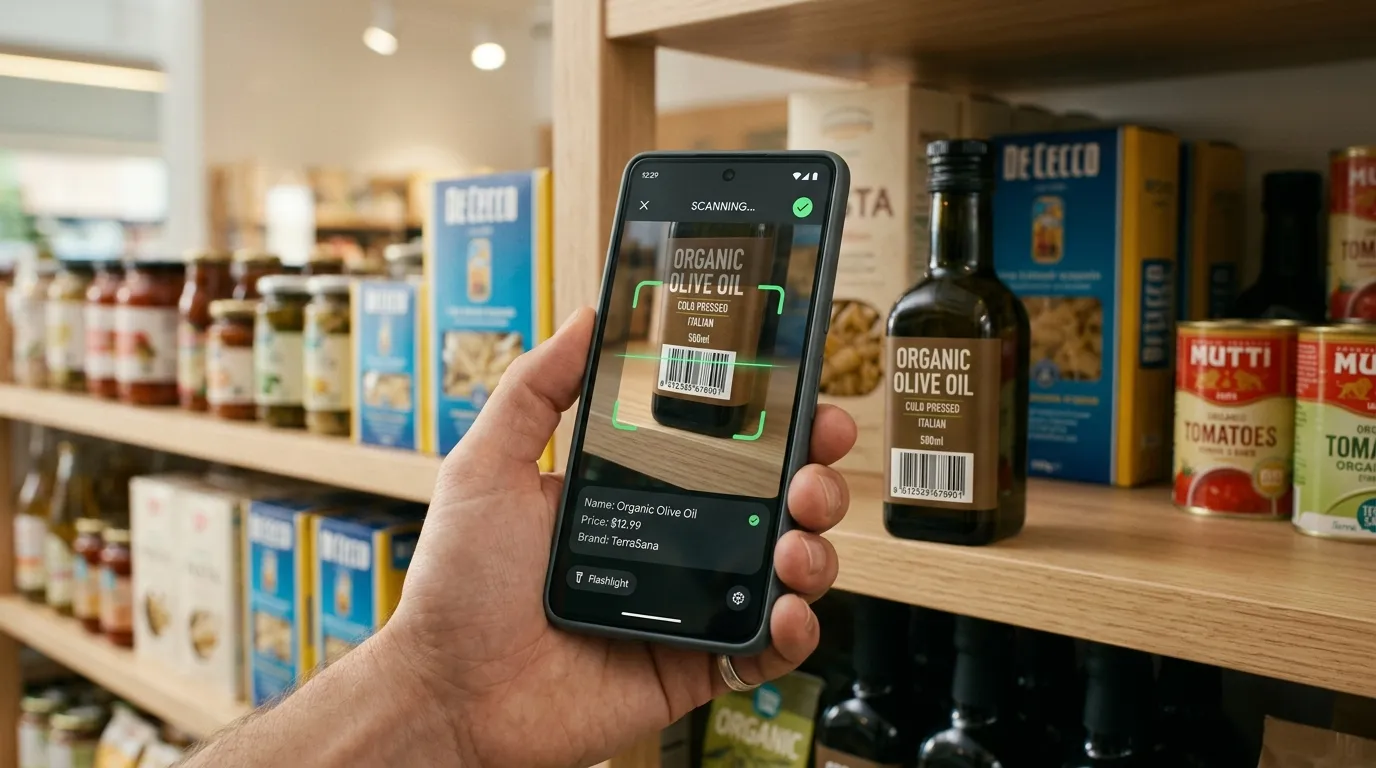
Bottom line first: a Canadian grocery brand and a Canadian grocery product are not automatically the same thing. A brand can be Canadian-owned, Canadian-positioned, or strongly Canadian-looking without every product meeting the strongest domestic-origin standard. The practical move is to treat branding as a clue, not a conclusion. Then use package claims, origin labels, and product verification to decide whether the product actually fits your goal.
Why “Canadian brand” is a messy category
Shoppers often use “Canadian brand” in at least four different ways:
- the company is Canadian;
- the food is processed in Canada;
- the major ingredients are Canadian;
- the brand feels Canadian in naming, packaging, or shelf placement.
Those four things overlap, but they are not identical. The CFIA guidance on origin claims exists precisely because consumers can be misled if the distinction is not clear.
Table: what a Canadian brand signal can and cannot tell you
| Signal | What it may tell you | What it does not guarantee |
|---|---|---|
| Canadian-sounding brand name | The branding or company positioning feels domestic | That the specific product is mostly Canadian |
| Made in Canada claim | The product was substantially transformed in Canada | That the ingredients are mostly Canadian |
| Product of Canada claim | The product is overwhelmingly Canadian in origin and production | That it is automatically the cheapest or best choice today |
| Ingredient-specific Canadian claim | One ingredient is Canadian | That the whole product meets a broader domestic-origin standard |
The Competition Bureau’s Made in Canada guidance is useful here because it reinforces the same core point: origin claims need to be truthful and properly qualified.
Why brand-first shopping can still mislead you
Brand-first shopping breaks down when:
- a familiar brand uses mixed sourcing;
- the packaging highlights one Canadian ingredient but not the full product story;
- the product was processed here but the core inputs were not;
- the price, size, or format no longer makes sense anyway.
This is why How to Buy Canadian Groceries in 2026 should sit next to a product-verification routine, not replace it.
A better workflow for checking Canadian grocery brands
If you care about Canadian brands in a practical way, the best workflow is:
- use the brand only as an early signal;
- read the product claim and origin statement carefully;
- open BarcodeVibe’s barcode scanner if the package still leaves doubt;
- use BarcodeVibe’s price comparison if you are choosing between two plausible options;
- open BarcodeVibe’s shrinkflation guide if the familiar product suddenly looks smaller or weaker in value.
That workflow is stronger because it treats the decision at product level, not brand mythology level.
When a Canadian brand still deserves extra scrutiny
The products that deserve the most checking are usually:
- pantry staples with frequent repeat purchases;
- products where origin language appears in small print or with qualifiers;
- items where price is rising and you may be tempted to overpay for familiarity;
- products where the pack size changed recently.
That is also why Barcode Scanner App vs Grocery Flyers in Canada and What Is Shrinkflation in Canada in 2026? are useful adjacent reads.
What to do next
If you want to judge Canadian grocery brands more accurately:
- start with BarcodeVibe’s barcode scanner;
- compare realistic substitutes on BarcodeVibe’s price comparison page;
- keep recurring products in BarcodeVibe’s tracker;
- use BarcodeVibe’s shrinkflation page when the trusted product looks less trustworthy than before.
The practical takeaway
Canadian grocery brands are useful signals, but they are still only signals. The product claim, the origin language, and the current value matter more than the brand story alone. Use BarcodeVibe to verify the product, not just to recognize the logo.
